
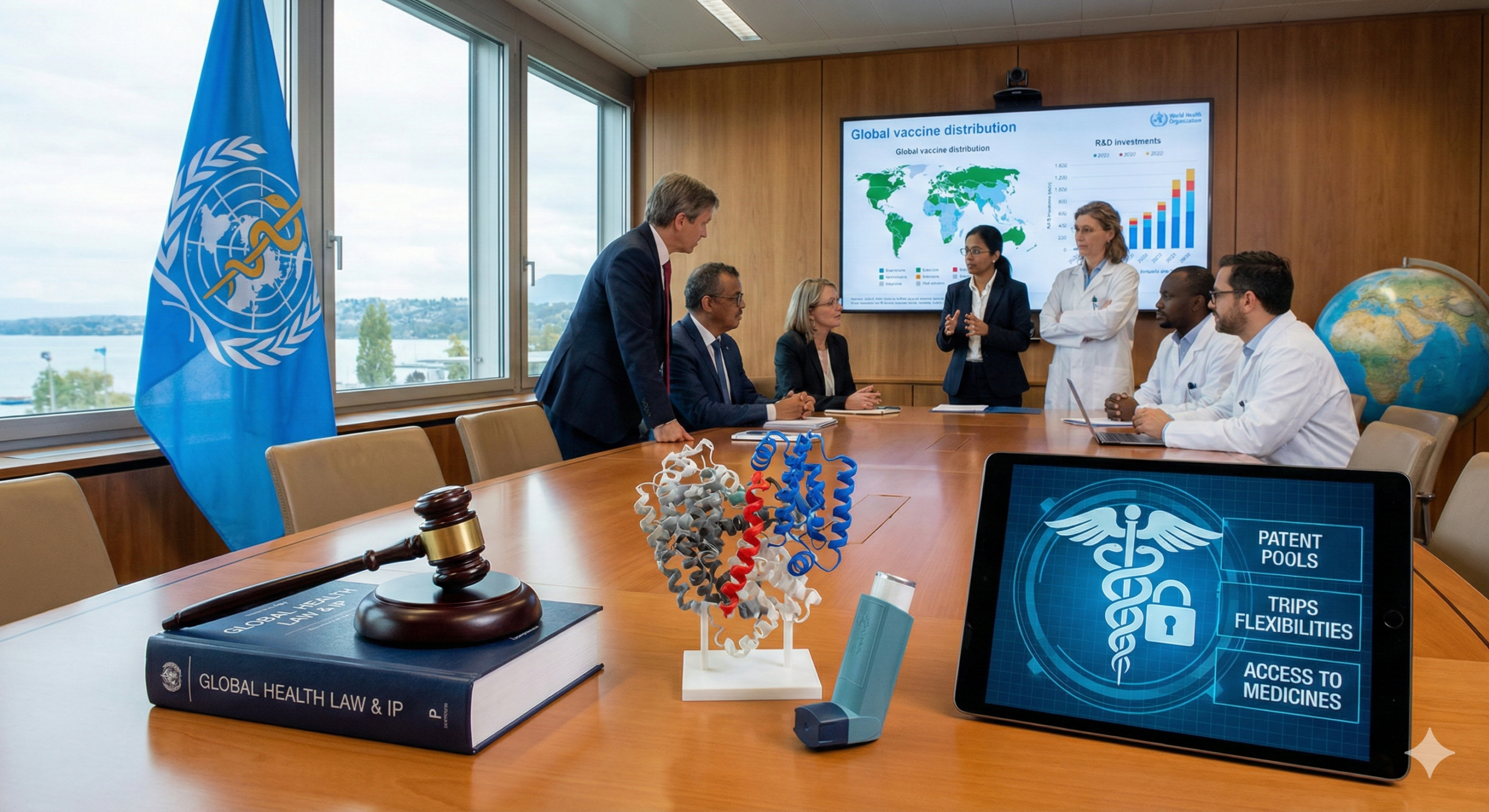
Researchers Jeremy de Beer and Rosa de Koker have published a paper which delves into international health law and intellectual property. Negotiation of new international health law on intellectual property, technology transfer, open science and pathogen access and benefit sharing: a textual and contextual analysis explores the evolution of international law and policy related to open science, technology transfer, intellectual property, and access to biomedical innovations during and after the COVID-19 pandemic from Canada’s perspective. The research highlights significant developments in treaty provisions regarding research and development, sustainable production of pandemic-related products, technology transfer, and benefit sharing.
Utilizing Canada as a case study, this paper examines its national experiences and negotiating positions, tracing the evolution from a proposed waiver of aspects of TRIPS to the negotiation of a new agreement for pandemic preparedness. They show that initial momentum for stronger equity-based measures, such as gender-inclusive language, gradually weakened. While high-income countries advocated for open access to pathogen gene sequence data, they were unwilling to voluntarily license their own data to low- and middle-income countries. As noted by the authors, “proposed mandatory sharing of innovation inputs, but voluntary sharing of innovation outputs, became a turning point in the negotiation process.” The compromises arrived at instead
resulted in diluted language on technology transfer in exchange for a new pathogen access and benefit-sharing scheme.
As highlighted by the authors, “seeing how forum shifting and negotiation strategies lead to compromises in international health law and policymaking enables a better understanding of emerging legal rules and their likely practical impacts, facilitates more effective national implementation of international law and supports further efforts to promote equity in global health.” The diluted wording of the final agreement regarding technology transfer demonstrates that “the world is no further ahead on this issue than before the pandemic.”