
Hani Morsi Presents in Cairo
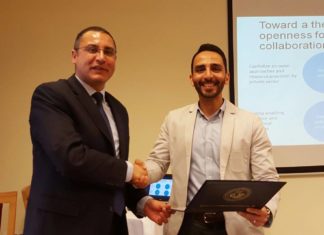
Hani Morsi, an Open AIR Post-Doctoral fellow at the Access to Knowledge for Development Center (A2K4D) in Cairo, gave a seminar last week entitled “Beyond openness: Investigating the success factors of open approaches to collaboration and innovation”. This was part of the Brown Bag seminar series of AUC’s School of Business.
Innovation ouverte en contexte académique à Abidjan, Côte d’Ivoire
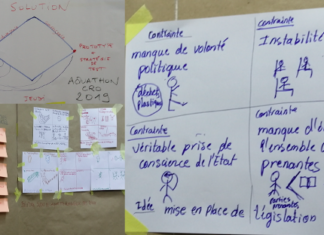
Par Ahou Rachel KOUMI
Ce blogpost est la deuxième partie d’une série de deux blogs sur les Journées de l’Innovation en Contexte Académique réalisées du 19...
Knowledge and Innovation in Africa: Scenarios for the Future
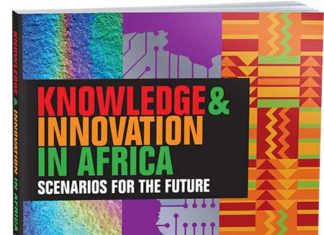
This 2013 book is the product of three years of literature reviews, expert interviews and scenario-building exercises by the Open AIR network. The authors trace the contours of knowledge and innovation in Africa from the founding civilisations to today’s current realities, and then set out the drivers of change that can be expected to shape innovation systems on the continent between now and the year 2035.
Intellectual Property Rights and Innovation: Assessing Regional Integration in Africa (ARIA...
To assist trade policymakers in the development of a framework, this paper explores IP issues, perspectives, and priorities related to both the CFTA and PAIPO. It suggests that process and substance issues are each important to create fair and balanced IP systems on the continent that stimulate innovation, growth, and competition.
Evidence-based Intellectual Property Policymaking
Authored by: Jeremy de Beer
Abstract: Governments have long been interested in making intellectual property (IP) policy based on sound evidence. There is a large...
Chapitre 1: Innovation, propriété intellectuelle et développement en Afrique

Jeremy de Beer, Chidi Oguamanam et Tobias Schonwetter Date de publication : septembre 2017 Télécharger : Chapitre 1: Innovation, propriété intellectuelle et développement en Afrique (3.7MB)
...
Open AIR Presents at Fourth Global Congress on IP and the...
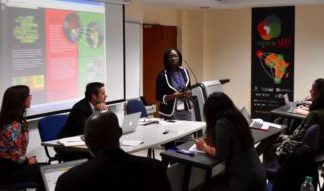
By Victor Nzomo
In the midst of two decades of TRIPS and three decades of openness, more than 400 delegates from over 50 countries converged...
Le Big Pharma a-t-il raison de freiner des quatre fers ?

Par Abdelhamid Benhmade
Sans pour autant être d’un optimisme béat ni sombrer dans un pessimisme démesuré, il est clair que la dérogation aux droits de...
MSMEs and Open Collaborative Innovation in Botswana
Authored by: Njoku Ola Ama and Francis Nathan Okurut
Abstract: This study explores the adoption, by micro, small, and medium-sized enterprises (MSMEs) in Botswana, of...
Access to COVID-19 Vaccines: the Patent Freeze Proposal and a New...

By Chidi Oguamanam and Sarah O’Flaherty
The State of Affairs
As the vaccination rate rises in Canada and other developed nations, developing countries globally continue to record an...