
African Innovation in the Fourth Industrial Revolution
By Chidi Oguamanam
The third industrial revolution (3IR) provided perhaps the most
significant insights into Africa’s potential to fast-track its sustainable
development. As with previous industrial revolutions,...
US Fails to Block Progress over Genetic Resources Text at WIPO-IGC...
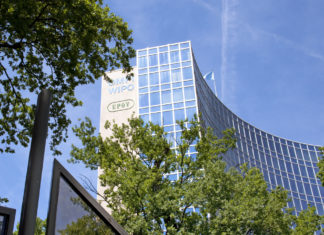
Photo credit: Image by Ville Oksanen via Flickr (CC BY-SA 2.0)
By Chidi Oguamanam, cross-posted from ABS Canada.
After six days of deliberations (June 24-29, 2018) to secure...
Behind the Number: A Review of Index Methodologies to Improve Innovation...
This paper reviews the methodologies of 16 indices in innovation, information and communication technologies, economic environment, governance, and development.
Reconciling Intellectual Property Rights and African Development: The Right to Development...

By Uchenna Felicia Ugwu
In September 2017, the Thabo Mbeki Foundation and the Centre for Human Rights (CHR), Faculty of Law University of Pretoria gathered together...
Reconciling Copyright with Creativity: New Insights from 2018 Conferences (Part I)

By Helen Chuma-Okoro and Nicole Tumaine
Access to knowledge (A2K) is necessary to further innovation and creativity. Due to the exclusive nature of...
Three Centuries and Counting: The Emergence and Development of Intellectual Property...
Authored by: Caroline Ncube. This chapter provides an historical account of the development of IP on the African continent which highlights how the introduction of IP systems and their transposed legislation displaced existing knowledge governance systems and entrenched a primarily extractor-biased IP system.
Innovation and Intellectual Property: Collaborative Dynamics in Africa
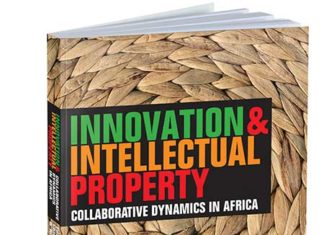
Editors: Jeremy de Beer, Chris Armstrong, Chidi Oguamanam and Tobias SchonwetterPublication Date: 2014Download: Innovation and Intellectual Property: Collaborative Dynamics in Africa (PDF, EPUB)
Innovation and...
A Cross-Regional Research Partnership for Sustainable Development: The Open African Innovation...
This paper positions and critiques the Open African Innovation Research (Open AIR) network as a unique cross-regional PPP research platform. It examines, on empirical and theoretical perspectives, the elements of the Open AIR project, including its core driving factors relevant to the development gap associated with IP and knowledge governance in Africa.
Les défis d’étendre Open AIR dans des pays africains francophones
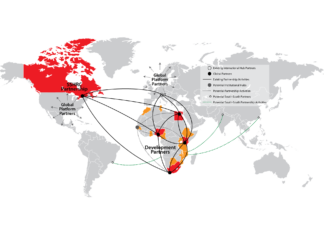
Le travail panafricain comprend plusieurs défis, entre autre la grandeur du continent, sa diversité, les différences juridiques, et la complexité des langues. Les défis sont particulièrement marqués pour l’innovation africaine. Il y a deux organismes régionaux dans le domaine de la propriété intellectuelle, en plus de l’Organisation mondiale de la propriété intellectuelle, ce qui souligne la diversité et les divisions linguistiques et régionales. Pour Open AIR, un réseau de recherche qui travaille dans de différents domaines de l’innovation et la propriété intellectuelle, on rencontre plusieurs défis à cause de cette diversité.