
Towards an Alternative Assessment of Innovation in Africa
Authored by: Nagla Rizk, Ayah El Said, Nadine Weheba and Jeremy de Beer
Abstract: This background paper is drafted with the purpose of revisiting the...
Open AIR hosts South African Maker Movement Workshop
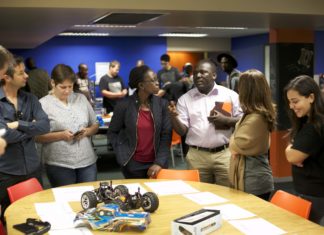
Enthusiasts and researchers gathered on Friday, March 3, 2017 to share research on the growing African maker movement. The workshop was hosted at the Institute for Economic Research on Innovation at the Tshwane University of Technology in Pretoria, South Africa.
Spotlight on Artificial Intelligence – Canada
In Canada, Open AIR’s hub is located within the Centre for Law, Technology and Society (CLTS) at the University of Ottawa (uOttawa). The Canadian...
The Role of Women and Girls in Unlocking Africa’s Digital Future

By Rosemond Yaa Kpeiku
The Second Africa Summit on Women and Girls in Technology was a three day event in collaboration between the World Wide...
Access to Sustainable and Inclusive Energy through Pay-As-You-Go Solar Technologies in...
By Mireille Yeo Wondia
There have been significant global efforts to meet Sustainable Development Goal (SDG) 7 – to ensure access to reliable, affordable and...
Open AIR’s Regulation for Innovation Project
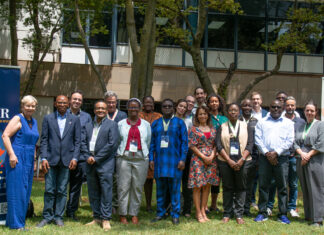
Open AIR has just released a video, on our @Afrinnovation YouTube channel, highlighting the network’s current large research programme, “Regulation for Innovation Supporting Sustainable...
African European Maker Innovation Ecosystem (mAkE) Project Completes Year 1
By Chris Armstrong
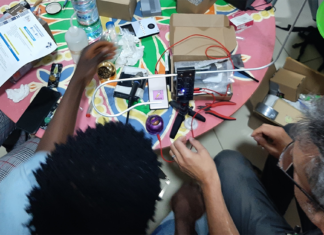
The EU-funded African European Maker Innovation Ecosystem (mAkE) project has now completed its first year of operation. Open AIR is one of several...
A Day Out in Wanyori Community
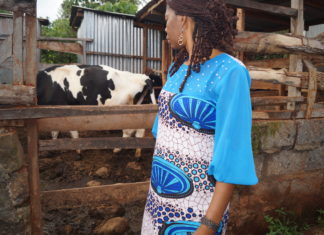
The purpose of my visit was to seek the permission of the community members to conduct research in their community and to fix an appointment with the women. It was a short visit since I needed to introduce myself to the women and also brief them on the purpose of the visit.
Open Science, Intellectual Property and the South African mRNA Vaccine Hub
Authored by: Omowamiwa Kolawole, Caroline B. Ncube, Jeremy de Beer
Abstract: During, and in the aftermath of, the global COVID-19 pandemic, there were strong calls for...
COVID-19 and Vaccine Nationalism: Africa’s Pathway to Access
By Chidi Oguamanam*
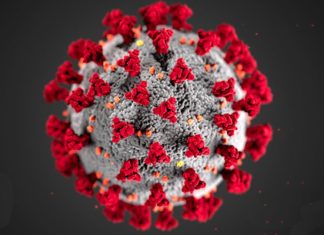
Except perhaps South Africa, credible statistics on the extent of the COVID-19 infection in African countries are lacking. Hypotheses on the rapid...